


Inside the Office
A few weeks ago, Duke’s Startup Showcase held its semifinal round. For the student founders involved, it’s already a big deal since it means you’ve made it past the first cut, you’re presenting in front of real judges, and the feedback you get in that room can genuinely shape how you think about your company.
But one team decided the formal session wasn’t enough.
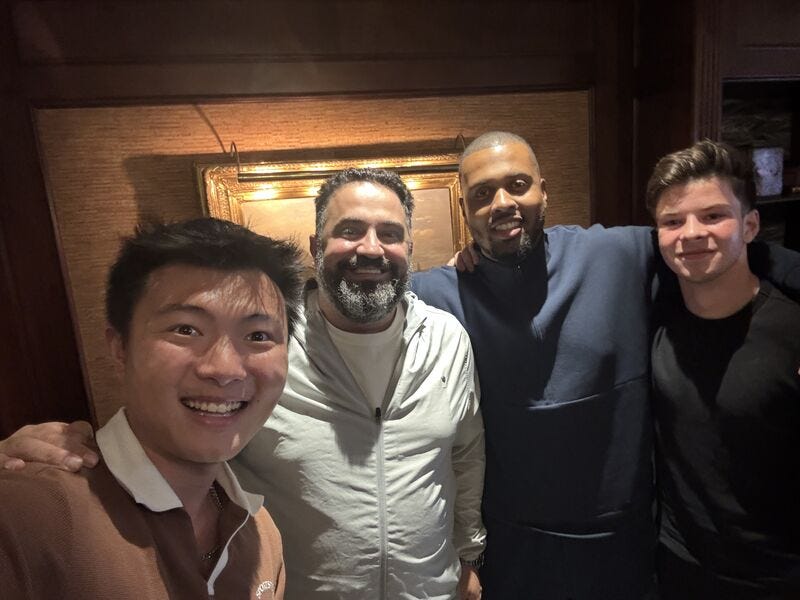
After they finished their evaluation, they learned that one of their alumni judges, the founder of a very well-known company, was staying in Durham for the night. So they did something most people in that situation would never do. They asked him to grab a drink after dinner.
He said yes.
What followed was more than an hour of real conversation. Not the polished, time-boxed kind you get in a judging session, but the informal, candid kind where successful people actually tell you what they think. Ideas were shared. Doors opened. All because someone was willing to ask.
Their boldness surprised me. I teach our New Ventures Development course and constantly work with student founders. I’m literally paid to help them. And still, almost none of them ask me for feedback, introductions, or help when they’re stuck. The resource is right there, but the ask never comes despite repeated encouragement to do so.
Most people want to help. Especially accomplished people who remember what it felt like to be early and uncertain. They’re not waiting to be asked, but when someone asks directly and genuinely, the answer is yes far more often than you’d expect.
The problem is we talk ourselves out of asking before we ever open our mouths. We assume we’ll seem naive, or pushy, or like we’re wasting someone’s time. We treat the ask itself as the risk, when the real risk is staying quiet.
Here’s the reframe: if you don’t ask, you already have your answer. It’s no. You’ve just received it silently, without giving the other person a chance to surprise you.
The worst case when you ask is that you end up exactly where you started. That’s not much of a downside.
What those students figured out over drinks is something that takes many founders years to learn. Your network doesn’t grow because people sense you need something. Your ideas don’t improve because the right mentor is thinking about your problem when you’re not around. None of that happens on its own.
You have to ask. Directly. Out loud. Even when it feels awkward.
The boldest thing you can do is also, usually, the simplest.
Ask.
-Jamie
Worth Your Time

I’m going to go a little weird with this week’s recommendation and suggest you read a short story from 1909 called The Machine Stops by E.M. Forster.
Yup… 1909.
I honestly hadn’t thought about it since my grad school days, but the reason it came back onto my radar is because I recently assigned it to one of my classes. And revisiting it now… holy cow…
In the story, Forster basically describes pieces of our modern world, but he did it more than a century before these things existed. Specifically, he describes people living in small, isolated rooms, interacting almost entirely through a global communication network that delivers lectures, music, and conversations through screens. It’s not exactly the internet or Zoom or social media… but it’s close enough to make you wonder if he had some sort of crystal ball.
Obviously, Forster didn’t actually “predict the future” in a crystal-ball sense. However, what he did was notice the direction the world around him was moving — increasing reliance on technology, growing distance between people and the systems they depend on — and then he extend those trends forward within the framework of a story. In other words, he didn’t so much guess the future as he inferred it from following the lines of technology.
And that’s the entrepreneurial lesson.
Great entrepreneurs aren’t fortune tellers. They’re observers. They pay attention to small cultural, technological, and behavioral shifts and then ask a simple but powerful question: If this keeps going, where does it lead? Being able to see even a rough version of that trajectory is a massive advantage when you’re trying to build something new.
So yes, recommending a 115-year-old short story in an entrepreneurship newsletter is a little weird. But if you’re interested in the skill of “seeing around corners,” it’s a surprisingly good place to start.
Tools We’re Tinkering With
Editor’s note: All resources suggested in this section are based on our opinions. These aren’t affiliate promotions and we don’t generate commissions.

These days, I often get asked the best editing software for social media videos. It’s a tricky question to answer because there are tons of options, all of them have some level of learning curve, and “right for you” is going depend on lots of factors ranging from how “pro” you want to be to how much money you want to spend.
So I’m not going to definitively tell you what you should use, but I’m going to share the three main tools I use depending on the job.
Quick, Basic, and Easy
The simplest tool I’ve found is an online video editing service called Kapwing. At $16/month it’s not free, but it doesn’t break the bank. More importantly, it gives you everything you’ll need from video editing to captioning and even some useful AI tools for cleaning video and audio. If you’re looking to just start editing while being able to keep everything easily saved in the cloud, Kapwing is a solid place to begin.
Mobile Editing
Lots of people like CapCut. I’ve had a better experience with an app called LumaFusion. LumaFusion was one of the first iPad-native video editors, so the experience works really well with touch controls. Plus, rather than a subscription, it’s a one-time purchase of $29 for the app. I don’t know about you, but I miss the days of just buying software once. In this case, if you’re serious about video editing, you could do worse than spend $29 just to have a quick and solid editing app on your phone and iPad for when you need it.
Primary Editing
No matter where you start with your video editing, if you get serious about content creation, you’ll eventually move up to either Final Cut Pro, Premier Pro, or DaVinci Resolve. All of them are powerful pieces of software, meaning, on some level, you can’t go wrong. For me, I wound up focusing on DaVinci Resolve, and it’s been great. There’s definitely a learning curve, but the basics are easy enough. Plus, the price is right… it’s free for the version that does everything you’ll need until you start getting super-serious. And to give you an idea of what that looks like, I’m not even to the paid version yet, and I use the software every day.

What a beautifully crafted message that truly represents the entrepreneurship creed:
“luck favors the bold”.
Astute observation. I must be talking to the wrong people or I need to work on my messaging. I'm 0 for 3 on conversations with successful business leaders. I've actually started conversations that fizzle as fast as I ask for advice, like when I was exchanging emails with one Aaron Dinin who stopped responding to my emails as soon as I asked a meaningful question. Oops!
No hard feelings to Aaron. I know he's really busy, and I'm an old-fart entrepreneur. I'll be 50 before most of his starry-eyed entrepreneurial students even graduate from college.
I'll keep trying. :)