
Inside the Office

College semesters have a strange, predictable rhythm to them. The first few weeks are fantastic, with students arriving early, chatting with friends, meeting new people, raising their hands, and even — gasp — voluntarily sitting in the front row. We’re all convinced this is going to be the greatest semester in the history of higher education.
The end of the semester is fairly exciting, too. The finish line is in sight, and even though we’re all exhausted, we’re all ready to end strong.
But the middle? Ugh…
Like clockwork every year, the energy starts disappearing a few weeks into classes. I guess the novelty has worn off, while the excitement of finishing feels impossibly far away. As a result, students start showing up later, participating less, and, in general, operating on autopilot.
To be candid, they’re not the only ones. By the middle of a semester, I start succumbing to the grind, too. Those lesson plans I’d written before the semester that seemed so exciting suddenly start looking like extra work. Combined with all the grading and whatever other obligations faculty juggle, it’s easy to feel a little overwhelmed and hopeless. Not that I’ve stopped caring. It’s just that the excitement of starting something has worn off but the satisfaction of finishing it is so far in the future that it doesn’t feel particularly motivating.
I bring this up because, even though I’m describing an academic semester, I could just as easily be describing almost any entrepreneurial endeavor.
Doesn’t building a startup basically follow the same pattern? You’re excited in the beginning as you start developing an idea, building prototypes, and imagining possibilities. Then, as things go well (hopefully) and you start getting closer to a goal, the enthusiasm picks up, too.
But between those two milestones — the beginning and the objective — you’re mostly muddling your way through an awful lot of ordinary work. You’ve built the prototype, but now you’re stuck fixing bugs. Or you’re planning yet-another marketing campaign.
The truth is, nobody wakes up excited to celebrate being 46% finished with something. But, for most of the entrepreneurial process, that’s where the work happens. And understanding this has some important implications entrepreneurs need to consider.
First, knowing the general shape of entrepreneurial progress, founders need to avoid treating declining excitement as evidence of something being wrong. Obviously you’re going to be less enthusiastic about a project you’re six months into than you were on Day #1. Remember, new things are exciting precisely because they’re new.
Second, knowing this pattern exists means we should plan for it. In other words, don’t rely on enthusiasm to carry you through a project. Create infrastructure to help generate motivation. For example, you can establish small milestones, build routines, and constantly remind yourself that all progress is difficult to see from one day to the next.
Third, and most importantly, we all should be better at appreciating the real value of “the middle.” The middle is where all the learning happens, the iteration happens, and the growth happens. In other words, the middle isn’t some unfortunate stretch of time that just happens to separate the two interesting parts of a project. The middle is… well… the project itself. While the beginning gets us moving, and the end gives us something to aim for, learning to work through the middle is what actually gets us where we want to be.
-Aaron
Worth Your Time
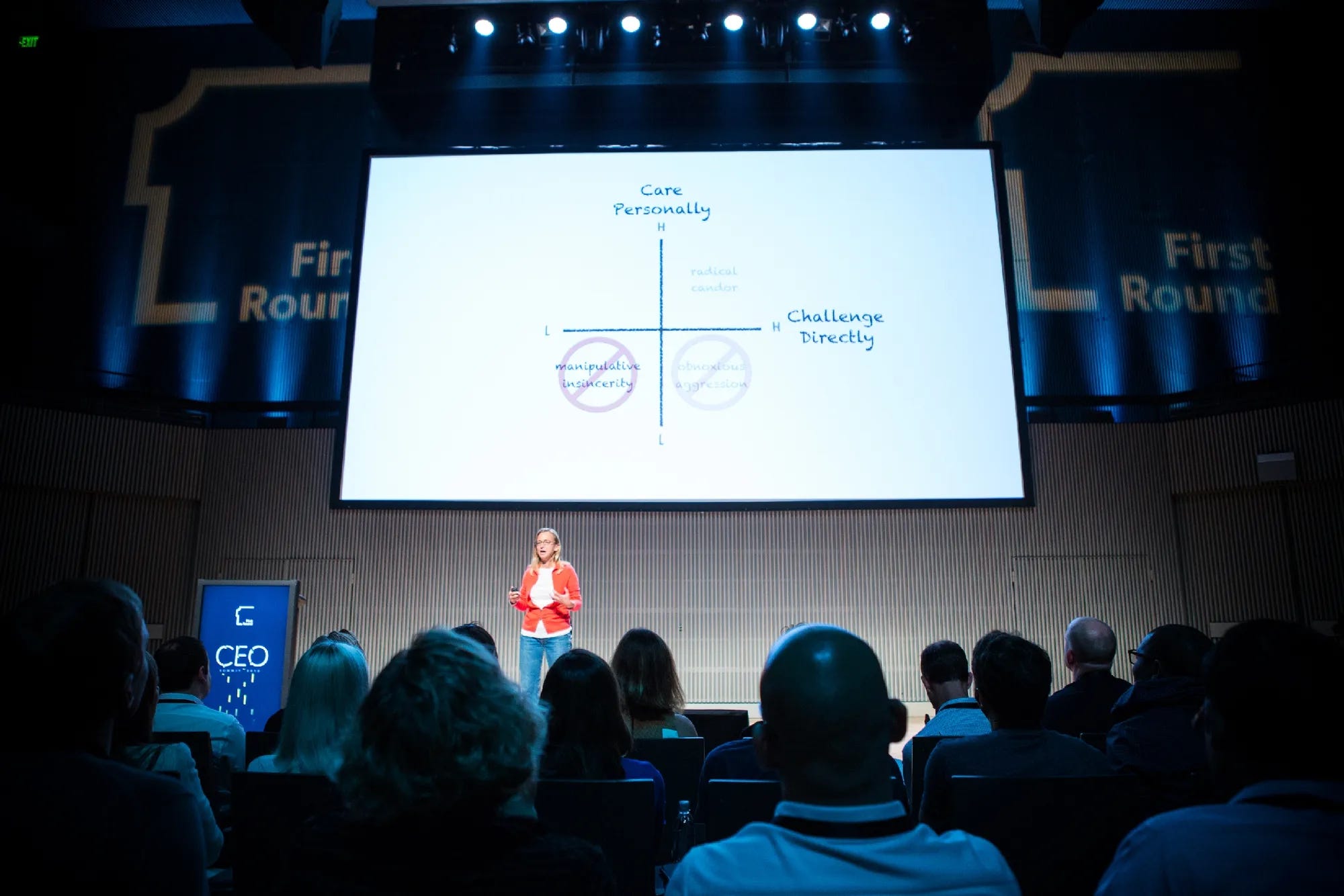
One of the things I struggled with most as an entrepreneur was managing people. I think it was because I’d always be so focused on what I had to do that I struggled keeping track of the people working for/with me.
I suspect lots of other entrepreneurs struggle with similar issues. Actually… I know they struggle because they often tell me. And that’s why I like to pass along potentially helpful articles about how to be a better manager.
This time, that article discusses a management technique called “radical candor.” You can probably guess what it’s about by the name. But I promise the concept goes beyond just “tell people what you think.” In fact, being honest — particularly with the people you manage — is surprisingly hard.
Hopefully this article makes it a little easier.